
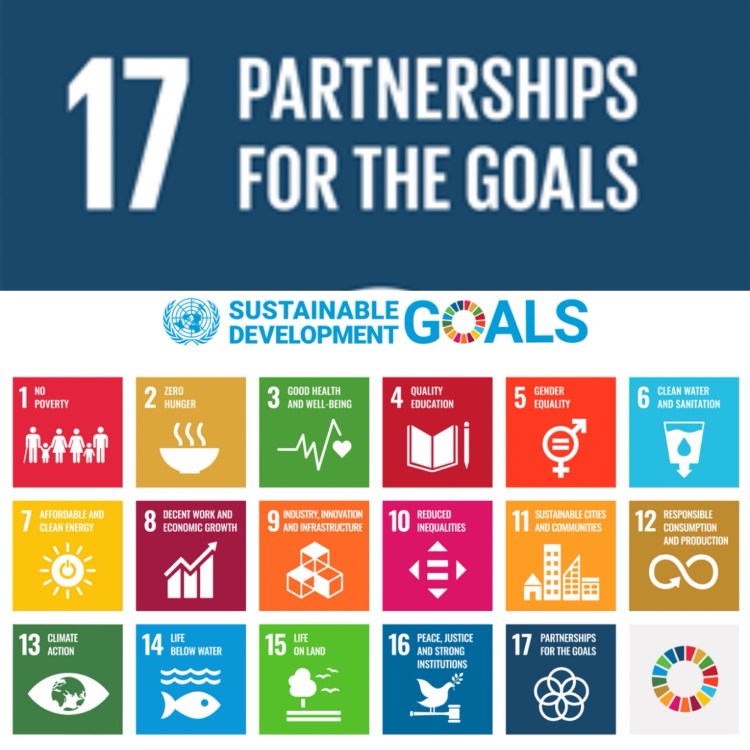
We turn SDG 17 into an engine for regional progress. Health, clean water, climate resilience, education, livelihoods—lasting change happens when solutions are connected, not siloed. SCN Kenya operates as impact infrastructure, enabling NGOs, community leaders, companies, social enterprises and public institutions to co‑create ecosystems that scale what works.
Why SDG 17 (Partnerships) Matters
You can’t photograph a partnership—but it’s what makes everything else possible. SDG 17 aligns people, capital, and capabilities so solutions reinforce each other and deliver measurable, durable results across whole regions.
How SCN Works
1) Co‑Creating Regional Ecosystems
We move beyond single projects to interlinked infrastructure systems—linking education, health, livelihoods, climate action, water, and mental wellbeing under one community activation model.
Example: In Bungoma (Tongaren), farming, food security, women’s empowerment, health, water solutions and local governance are delivered through a coordinated SCN model with national and international NGOs, farmer cooperatives, Academia, companies, private and public partners.
2) Collaboration as a KPI
Collaboration isn’t a soft value—it’s tracked and improved. Our SCN Index measures knowledge sharing, co‑delivery, and system influence so partners and funders see how the network strengthens over time.
3) Local Ownership + Global Learning
Implementation is locally led. SCN as system architect enables peer exchange with practitioners in India, Germany, and beyond so Kenyan partners adapt proven models faster and more effectively.
4) Integrated Community Activation Zones
Multiple organizations offer layered services in one place—safe housing, mental health, skills training, climate education, water access, youth support, hygiene …—managed by local actors with SCN facilitation.
Example: The VICCO SCN core partner runs (Mukuru, Nairobi) links in its own Knowledge Center a girls’ shelter, counseling, climate literacy, and vocational training. It uses solutions from other SCN centers in Kenya and SCN India network, works with social enterprises and participated in an online trainig program that embraces knowledge in health, digital literacy, kitchen gardening, teenage mother support (self-financing SCN shop based on cross-financing vouchers). It shares with SCN partners ideas, local solutions and NGO partnering networks.
5) Open, Shared Infrastructure
We provide common tools and processes—systems‑thinking training, monitoring templates, community assessments, exchange formats, and back‑end coordination. SCN is an enabler, not a top‑down implementer.
6) Market‑Enabled Empowerment
Beyond training, we build market readiness and value chains—connecting producers to buyers, strengthening cooperatives, and supporting processing so communities sustain income and resilience.
7) Learn Fast, Share What Works
Start small, iterate, scale. We document results, run joint reflections, and spread effective models across counties—avoiding idea‑killers and accelerating what’s proven.
What Partners Gain
- One entry point, many trusted actors: Efficient access to vetted community partners across sectors.
- Scalable portfolios: Support solutions designed for replication and regional uptake, not one‑offs.
- Evidence of systems change: Network metrics, diffusion tracking, and community voice alongside KPIs.
- Risk reduction: Shared infrastructure, diversified delivery, and co‑investment models.
Call to Action
Invest | Co‑Create | Scale
- Businesses & Investors: Explore portfolio co‑investment, value‑chain pilots, and market access partnerships.
- Foundations & Donors: Back multi‑partner regional ecosystems with clear, network‑level evidence.
- Public Sector: Align policy and county programs with locally led, connected delivery models.
Let’s build the infrastructure that makes impact scalable.
→ Contact SCN Kenya | → Explore Our Events & Spaces | → See the Community Shop in Eldoret
 SCN Kenya